Tuesday, January 18, 2011

The Stamp Of Approval - Stamp dealer Stanley Gibbons had a good 2010 and is aiming for a great 2011.

From the Motley Fool - More on Stanley Gibbons and the stamp market - To most of us, postage stamps are nothing more than scraps of paper to be stuck onto an envelope -- a mere promise to deliver a letter or package.

However, to philatelists (stamp collectors), stamps are tiny works of art to be collected and treasured. What's more, stamp-collecting is far from being a peculiarly British obsession. There are estimated to be 30 million stamp collectors in China alone.

Googling 'stamps' or 'stamps collecting' brings up the Stanley Gibbons (LSE: SGI) website as the number-one entry. The iconic British firm, which dates back to 1856, has dominated this market since it became the world's first stamp dealer.

In recent years, Stanley Gibbons has expanded into other collectibles, such as autographs, rare records and other memorabilia. As well as acting as a dealer and auctioneer, Stanley Gibbons has thriving mail-order and online retail outlets, as well as publishing several price indices for rare stamps.
Licking the market

Stanley Gibbons -- which is incorporated in Jersey -- became a public company over 10 years ago, joining the junior Alternative Investment Market (AIM) in September 2000. The past decade has been a very good one for both the company and its shareholders.

In the eight years from 2001 to 2009, Stanley Gibbons saw its pre-tax profit leap tenfold to more than £4 million. Over this period, its earnings per share (EPS) increased at an even steeper rate, rising from under 1.3p to 14.7p at the end of 2009. This substantial growth made the firm an oft-discussed candidate on our Growth At A Reasonable Price (GARP) discussion board.

What's more, the firm's shares have outperformed the wider stock market by a huge margin. From their float price of 18p, they soared to peak above 250p in June 2007.

However, Stanley Gibbons couldn't escape the credit crunch and economic downturn. After six years of double-digit earnings growth, the stamp dealer suffered its first setback since becoming a PLC. In 2008, profits dropped 18% and earnings slid 2%.

During the market meltdown, its shares dived to 80p in January 2009. This turned out to be a great time to buy, as today Stanley Gibbons shares are up 3.5% at 178p -- more than double their 2009 low.
Investing in stamps

Stanley Gibbons' success has come from positioning stamps as 'alternative investments,' placing them in the same category as art, antiques, coins, fine wines and vintage vehicles.

According to the dealer's GB30 Rarities Index, launched in 2004 and backdated to 1998, sought-after stamps have massively outperformed shares. In the 12 years to the end of 2010, this index shot up 275%, which equates to compound growth of 11.6% a year. Within this index, the value of individual stamps has risen between 131% and 540% since 1998.

In comparison, the blue-chip FTSE 100 index is below 6,000 today, almost exactly where it stood 12 years ago. Hence, Stanley Gibbons argues that stamp prices are largely uncorrelated with shares, property and other assets and, therefore, add diversification to portfolios.
How did 2010 turn out?

Stanley Gibbons makes nearly two-thirds of profits made in the second half of the calendar year, so its shareholders will be keen to find out how things turned out in July to December.

According to today's trading update, business has been brisk, with turnover ahead of market expectations and profits broadly in line with forecasts. This comes despite substantial investment in its websites, IT systems and marketing campaigns.

Likewise, cash generation was strong, helping to fund two earnings-enhancing acquisitions (M & N Haworth and the Benham Group) and the refurbishment of the flagship London store at 399 Strand (to be completed by April). Also, website and database improvements will be rolled out in the first quarter of 2011, aimed at bringing in more customers.

As for 2011, a strong order book from investment clients is expected to lead to higher profits, plus the group expects to benefit from increased sales activity and publicity surrounding the Royal Wedding on 29 April.

In the words of the chairman:

"Future growth in revenues and profits are anticipated... the Group's businesses are in a stronger position...than at any time in recent years."
The stamp of value?

Given the above statement, Stanley Gibbons seems sure to meet analysts' forecast of pre-tax profits of £4.5 million and EPS of 15.6p. This puts its shares on a price-earnings ratio (PER) of 10.4, and the anticipated dividend of 5.45p gives a dividend yield of 3.1%. (It's worth noting that the firm's EPS is flattered by Jersey's generous tax regime.)

However, one sign of a healthy, growing business is weaker than I'd prefer: cash generation is running at only half of pre-tax profits. Also, the group's cash pile declined from over £3 million at the end of 2009 to £1.8 million by June 2010, largely due to £1.3 million spent on new stock.

Clearly, Stanley Gibbons is an entrepreneurial little business making the most of a highly niche market. However, its shares are a bit too pricey for me, as they trade on a PER above 10. This isn't cheap for a micro-cap (sub-£50 million) AIM company competing with the likes of online auctioneer eBay.
One that got away

That said, I spotted the value in Stanley Gibbons during the market slump which ended in March 2003. I owned the shares for about four months, buying at 25p and selling at 40p for a quick 60% profit. Had I held onto them, they would have gone on to breach 250p by mid-2007.

In other words, had I had the patience to wait four years, Stanley Gibbons would have been a 10-bagger. Yet another mega-return that got away!

Source:  http://www.fool.co.uk/news/investing/company-comment/2011/01/18/the-stamp-of-approval.aspx

Monday, January 17, 2011

Stamp collectibles group Stanley Gibbons sales to top market expectations - Royal Wedding will give big boost

Rare stamp and collectibles specialist Stanley Gibbons said today turnover for 2010 is estimated to be ahead of market expectations, with profits broadly in line.

The company's interim results announcement on 6th August 2010 advised of the substantial one-off costs incurred during the year associated with the development of its websites, database asset management system and international marketing campaigns promoting rare stamps and historical documents as an alternative investment asset class. Despite this expenditure in creation of future growth strategy, Stanley Gibbons said it continues to grow current operating profits.

Operating cash generation for the year to end-December was strong, providing the ability to fund acquisitions together with capital investment in the refurbishment of the retail premises at 399 Strand and investment in websites and IT systems to facilitate future growth opportunities, all done from internal cash resources.

The new websites are scheduled for a phased launch in the first quarter of 2011.

The company said substantial additional profits and clients were generated through its new investment office in Jersey.

The have been developments of trading relationships in China and the related expertise in its rare stamps in order to gain access to this biggest stamp market in the world, (an estimated 30 million collectors). Stanly Gibbons completed of two bolt-on acquisitions during the year - the businesses of M & N Haworth and the Benham Group, both of which are expected to further strengthen the overall brand offering and provide additional predictable revenue and profit streams in future years.

Trading in the first quarter of 2011 is expected to benefit from a strong order book from investment clients following the success of various marketing efforts in December.

The launch of our new websites in the first quarter will build substantial new profit streams for the business over time through cost effective online trading channels, particularly appropriate for lower value stock items, the company said.

The recent acquisition of the Benham Group business has proved timely following the announcement of the Royal Wedding to take place in April 2011. This business stands to benefit from sales of associated first day covers and other commemorative collectible products marking the most exciting Royal event in recent years.

The Board is satisfied with the way management is implementing its strategy and believes there are substantial opportunities to continue to grow sales and profits in 2011 and beyond.

Martin Bralsford, Non-Executive Chairman commented: 'The result for the year is good, particularly having regard to the additional burden on management of longer term development projects whilst still meeting current profit growth objectives.

'Future growth in revenues and profits are anticipated from the valuable groundwork laid in 2010.

'Overall, the Group's businesses are developing in line with strategy and are in a stronger position to deliver continued growth to Shareholders in the future than at any time in recent years.'

For the full report from Stanley Gibbons themselves - http://www.stanleygibbons.com/corporate/shareholder-information/statements-and-announcements/regulatory-announcement---trading-update---jan-2011.aspx

Story provided by StockMarketWire.com

Friday, January 14, 2011

The stickier points of stamp collecting

It's a sticky problem.

Stamp collecting has been documenting Canada's postal history since the mid-1800s but technology and glue are threatening the old hobby.

It's one of the oft-discussed topics at the annual stamp show, held Saturday at Woodman Park Community Centre.

"Self-sticking stamps are ruining the hobby for collectors, said Jacqueline Cowper at the show.

The primary employee at the postal office in Dell Pharmacy, Cowper deals with a lot of collectors and she hears their complaints "all the time."

The sticky stamps are designed to stay firmly on an envelope so that users can't peel them off and re-mail them if they aren't cancelled but the glue has become the bane of collectors who, for decades, have easily soaked stamps off envelopes with nothing more than water.

"But there's a balance because other people who are doing mass mailings really like the self-sticking stamps because they don't have to lick them," said Cowper.

While some collectors get around the problem by purchasing special mint sheets that show the same collectible stamps without a sticky back, others have investigated methods to separate the stamps from their envelopes.

Carbon tetrachloride is one method, said Grant Reavely, but it comes with a warning.

"It's toxic, but I've heard it's the only way to dissolve the glue."

In the US, some have resorted to a chemical called Bestine and various lemon-flavoured aerosols.

But Cowper said her "best collector customer" has come up with a simpler dissolution solution.

Walter Hopfinger of Brantford, who collects British Colonial stamps, says he soaks the self-sticking stamps in hot water in the kitchen sink for about 20 minutes and then laboriously peels away the stamp from it's glue, trying to leave the now-white gum on the envelope.

"It takes a lot of patience, but you don't want to destroy that beautiful stamp," Hopfinger said.

The sticky problem has grown into a world-wide trend with many countries embracing the self-sticking stamp and many collectors can't be bothered dealing with the adhesive.

Those that love the stamps and hate the glue can still collect, says Hopfinger.

"If you have difficulties, cut around the stamp and put it in your album as it is," he advises. "It's still beautiful."

Stamp club president Bob Anderson said part of the goal of the stamp show is to get people involved in the interesting hobby.

While the club has always encouraged kids to participate with stamp giveaways and special contests, it also works to catch the interest of those in their 40s or 50s who have rediscovered a passion for the tiny collectibles.

"Kids are interesting because they're young and think outside the box, said Anderson. But people in their late 40s and early 50s have their kids leaving the house and are looking for something to do. They have the disposable income to collect."

All a someone needs to do to get the bug is to zero in on an interest in the hobby and there will be stamps to satisfy the need to collect, whether they are from a particular country, an era, a type like errors or postmarks --or an explicit topic like trains, dogs, famous people or sports.

One young collector, Amy Trakalo, 11, won the award for best junior exhibit at the show with a display on cats from around the world.

While the club also sells stamps at the ongoing meetings, the show gives collectors a much wider inventory to examine and, said Anderson, everyone tends to find some little gem that's perfect for their collection.

"It doesn't matter what the cost is as long as it's valuable to them," Anderson said, indicating that the collectibles can range from 10 cents to $250.

The Brantford show is always the first one of the new year in this area of Ontario, so plenty of patrons are out spending a bit of Christmas money on themselves. This year visitors were from Chatham, Waterdown, London, Kitchener, St. Catharines and Port Dover, although nasty weather on Saturday kept some from the Toronto area away.

The club meets on the first and third Tuesday nights of each month plus there's a Junior Stamp Club that meeting at the police station on Elgin Street on the third Saturday morning of each month from September to May.

"The meetings are always open to the public and drop-ins are welcome," said Anderson. He noted that at the evening meetings, teens younger than 16 should be accompanied by an adult.

The next meeting of the club is a sales circuit night offering stamps from members for sale, and there will be dealers, a silent auction, and guest presentations.

For more information, go to www.brantfordstamp.org.

Source: http://www.brantfordexpositor.ca/ArticleDisplay.aspx?e=2921995

Wednesday, January 12, 2011

Stamp collectors search for treasures at Clarksville Indiana show

A small but avid crowd of stamp collectors made it to the annual Southern Indiana-Louisville Area Stamp Collectors Marketplace at the Holiday Inn in Clarksville, Ind., over the weekend.

Dedicated philatelists pored over boxes and binders filled with stamps during the show on Saturday and Sunday, looking for the perfect ones to add to their collections.

Don Dillon, 80, said he has been collecting stamps off and on for about 60 years.

“I guess I have around 7,000 stamps,” he said. “That's really rather a modest collection.”

He said he prefers to focus on stamps that are no longer produced.

“They keep putting out so many new issues that it's almost impossible to keep up with them,” he said. “I focus on the pre-cancels. They don't really make new ones so it's easier to keep up.”

Some collectors look for particular countries or images, while others look for stamps within a theme.

Karl and Rosemarie Leasure searched for stamps related to World War II or having a military theme.

Karl, 69, has been collecting stamps since he was an 8-year-old boy in Germany.

“I buy the historic stamps and sell them at the gun show,” he said. “People go nuts for the World War II stamps. I always tell my customers I will turn them into stamp collectors yet.”

Another collector, Ernie Julian, 58, said “A collection is never finished.”

He said he has been collecting stamps since his grandmother started him in the hobby at age 9.

“I come to this show every year,” he said. “I never miss it.”

Julian owns two large U.S. collections and a six-volume citation foreign collection. But the pride of his collection is the U.S. portion of his worldwide zeppelin stamp collection.

“The money you put into it, you never lose,” he said of stamp collecting. “It's like putting money in the bank.”

While the stamps may not lose value, some of the vendors at the event indicated they probably wouldn't increase a lot, either.

“The market has been pretty flat since the 1980s,” said John Findling, a partner with Collector's Stamps Ltd. in Louisville since 1979.

“The hobby is changing,” he said. “The Internet is changing the way people collect. And fewer and fewer people are getting into the hobby.”

Ed Davidson, owner of Davidson's Stamp Service in Indianapolis, agreed.

“A lot fewer kids are getting into the hobby, which is a shame,” he said. “Kids get introduced to it and it's all fun and games, but they actually learn something along the way.”

He said he finds the hobby to be a great stress reliever, saying, “At some point along the way to adulthood, you find out there's an awful lot of stress out there.”

When he began looking for a way to relax, he remembered his childhood stamp collection and asked his mother to ship it to him.

“It became a passion,” he said.

Source: http://www.courier-journal.com/article/20110109/NEWS02/301100018/Stamp+collectors+search+for+treasures+at+Clarksville+show

Tuesday, January 11, 2011

The Queens Head is Saved! British Government Decision

This is a follow up to our story http://stampcollectingresources.blogspot.com/2010/12/off-with-her-head-queen-to-be-taken-off.html

Thank goodness the British Government acted quickly on this - can you imagine a GB stamp without the Queens head? Well I hope to be alive to see Prince Charles, or King Charles, as he will be known - one day!


Queen Elizabeth has appeared on postage stamps since 1967. Now Britain plans to privatize the Royal Mail. That caused fears that some foreign buyer could remove the queen from stamps. The government says it will add a condition to the sale: Elizabeth stays on stamps.

If you wish to leave a comment, we'd be delighted to hear from you - just fill out the form below.

Source: http://www.npr.org/2011/01/10/132800509/uk-to-make-sure-queens-head-stays-on-stamps

Sunday, January 9, 2011

Sacramento's California aging stamp collectors keep the faith

Scarcity sells in stamp collecting. The older and less plentiful the specimen, the more it gets philatelists' hearts aflutter and sends interest and price soaring.

But when it comes to the demographics of this noble, if a tad fusty, hobby, a scarcity of younger enthusiasts – those yet to be targeted by the AARP – is cause enough to get dealers and collectors to look up from their magnifying glasses and take notice.

"Look around," said Jim Leer, 68, of Oroville, waving an arm around the room of balding gray pates bowed over bins at the Sacramento Stamp Fair on Saturday morning at the Knights of Columbus Hall. "Where are the young kids? Show me one. Wait, there's one – Gary. He's been a dealer for 25 years. That qualifies as the new guy around here."

Kidding aside, one might think that stamp collecting is in danger of being canceled out and shipped to the dead-letter office of popular hobbies. These days, young people are more apt to collect e-mails – or texts and tweets – than something so quaintly 20th century as stamps. Gee, Gramps, you mean people actually licked the backs of these things, stuck 'em on envelopes, put them in a box, and it took days to arrive someplace else?

Philatelist A. Keith Kaufman, 55, whose booth featured stamps from the British Colonial period selling for hundreds of dollars, says the future of stamp collecting is in Europe and Asia. The United States, he says, is not fostering the tradition. He blames the advent of electronic communication. He laments that kids just aren't exposed to the aesthetic pleasure of a finely designed stamp.

"There too many other distractions, like video games," says Kaufman, who lives in Southern California. "I don't see the end of the line for stamp collecting. But we have very little outreach to younger people, particularly on the West Coast.

"I gave a couple of talks a few years ago to my daughter's classes in Los Angeles, and the kids get really excited. They learn about history and geography. To this day, there are about 10 kids who still collect stamps. It's all about exposure."

Those hoping that stamp collecting might be subject to a retro revival among hip 20-somethings – à la knitting – admit it's a long shot.

But longtime dealer Bill Hontos, of the Oceanview Stamp Co. in Huntington Beach, says that once the younger generation ages, they might better appreciate the quiet satisfaction that comes from finding a precious stamp from long ago and far away.

"I've been doing this 25 years, and it's always been that way," Hontos said. "They might pick it up as kids, have a little beginning collection, then put it away for a while because they've discovered girls or have to work. Then, as they get older, they have more leisure time, and they'll pick up (the hobby) again."

Hontos says nearly all of his dealings with younger (under 50) collectors come via e-mail and Internet queries – "I guess there's a little irony in that," he says, ruefully – but the rarer stamps have drawn interest from young and old alike strictly as investment options.

"People like having their money invested in something like this, especially with currency discrepancies," he said. "There (are fewer) sales at the shows like this, but more on the Internet, especially overseas."

Despite their aging ranks, sales among stamp collectors have risen 89.7 percent since 2000, according to Stanley Gibbons, the world's top stamp dealership, based in London.

Prices of the rarest stamps, Stanley Gibbons reports, have risen 38 percent since 2008.

That could be one reason why dealers such as Leer are able to joke about the graying of stamp enthusiasts.
"The business is alive and kicking, even though the average age of the collector is 72," Leer said. "Listen, a collector who comes to these fairs is willing to spend about $1,000 (on stamps). You really think young people today have got that to spend?"

Indeed, 71-year-old hobbyist Don Parker of Folsom said he was happy not to have to elbow around youngsters with baggy pants and music leaking out of their headphones in order to find stamps issued by Pakistan shortly after it was partitioned from India in 1947.

"It's fascinating," Parker said. "Pakistan didn't have time to issue its own stamps, so it just printed the word 'Pakistan' over India's stamps. That's what I'm looking for."

Parker ended up not finding anything worth buying. But that's OK. Stamps are only one of his retro passions. He also collects typewriters.

Source:  http://www.sacbee.com/2011/01/09/3310375/sacramentos-aging-stamp-collectors.html

Friday, January 7, 2011

Stamp Tongs: What they are, how to use them and choose them - An essential tool for all stamp collectors

This is the first of several stamp collecting articles Boscastle Stamp Collecting Supplies will publish over the next few months about all subjects relating to the buying and using of various stamp supplies, stamp accessories and stamp albums.


We know it can be quite intimidating for a new collector to go into a stamp store, or go to a stamp show, and ask the busy dealer questions about some of the basics of stamp collecting and how to properly use the equipment. And when faced with a huge selection or array of products to choose from the decision for the collector is made a lot harder.

In these articles we hope to unravel some of the mysteries of why you should use various supplies and accessories, and we’ll try and make the selection of which one to buy a little easier.

Our goal is to make the stamp collecting hobby more accessible and enjoyable for juniors and beginners, for collectors who are rediscovering the hobby later in age, and to remind more serious philatelists about the basics.

What are stamp tongs?

Stamp tongs are an essential tool used by stamp collectors and philatelists around the world. “Stamp tongs” is the name primarily used in North America, while “stamp tweezers” is the preferred name in much of Europe, especially in the UK.

While stamp tongs are similar in shape to the domestic tweezers you might find in the bathroom for cosmetic or medical use, they are however very different in that they do not have sharp or serrated ends which can actually damage a stamp. Therefore household tweezers should not be used instead of stamp tongs as they often damage stamps.

The best stamp tongs are always made of metal, with plastic versions suitably available for children. They are generally made of two flat metal pieces, joined together at one end to create a spring action that allows the free ends to pinch together with a smooth surface to hold the stamp.

Many of the premium stamp tong brands have a thick nickel coating on them to prevent rusting and corrosion and will last a typical stamp collector a life time.  Premium stamp tongs tend to be manufactured in Solingen, Germany and can come under many different brands.

If your budget can take a few more dollars, or you have rare stamps deserving the royal treatment then gold plated stamp tongs are top quality, will never tarnish and feel nice when using them.  Additionally, coloured stamp tongs, in red, green and blue are appearing on the market.

Why use stamp tongs?

A pristine stamp can be irretrievably damaged by even the most careful handling, ruining a beautiful item and lowering its value. Even the most delicate touch risks bending your stamp or damaging the perforations. That’s why we need to use stamp tongs.

Stamp tongs and stamp tweezers are universally used by stamp collectors and philatelists around the world because they are a reliable and safe way to hold a very delicate and small piece of paper without damaging it or getting skin oils on them.

Even after washing hands, a light coating of skin oil can transfer to the surface of the stamp and this can stain the printed design, either immediately or by reacting with the ink over time.  If you have damp or sweaty fingers, or you live in a hot or tropical climate, you have to use stamp tongs to take care of your stamps.

Also, if the stamp has some gum or is mint never hinged (MNH) the gum should not be disturbed in any way with a moist finger print, grease, dirt or any skin oils.

Any defect found on a stamp may detract from its value and may hurt the stamp more as it ages.

Stamp tongs can also be very efficient at handling large numbers of stamps when sorting them into piles, putting them into stamp albums, envelopes or stockbooks, and when mounting them. They are the perfect tool for gently gripping a stamp to hold it up to the light, or to examine it closely for watermarks, perforations or paper marks and errors.

We recommend that stamp collectors inspect their tongs from time to time to make sure they are clean and free from damage. Tongs that are properly handled will last for many years, but they should be replaced if they show any defect to the tips, such as a kink or a dent which could transfer a mark onto a stamp.

How to use stamp tongs

Stamp tongs are easy to use. The basic technique is to slide the tong along the surface of the table top with one tip going underneath the stamp and then pinch the other tip onto the front surface of the stamp.

Apply the right amount of pressure and hold the stamp securely between the tong tips, but don't apply too much pressure when pinching the tongs together, otherwise a mark may appear on the paper of the stamp.

Ensure the tips of the stamp tongs are in the centre of the stamp and not touching the perforations, as they can be easily damaged.

If you’re new to stamp collecting try practicing using the tongs on small torn up pieces of paper, flipping them around and sorting them into piles, until you’re comfortable using the tongs.

Different types of stamp tongs

Stamp tongs can range in length between 10-20 cm (4-8 inches). The most popular stamp tong lengths are 3-1/2” for juniors and small hands, 5” for beginners and 6” for professionals.


Check out Shop Here For Stamp Tongs and Stamp Tweezers for a large selection of stamp tongs and tweezers, ranging in price from $2.50 to $12.95.

The tip is usually thin, polished smooth and rounded, so it can slide under a stamp easily, without damaging the most delicate and rarest of stamps. They may come in several different tip shapes, some bent and some straight, as illustrated in the diagram below.


A – Spade or Shovel Tip
B – Pointed Tip
C – Bent Spade or Shovel
D – Round Tip
E – Professional Point
F – Lethal Point


Which stamp tong do you choose to buy?

While there is a stamp tong available for every budget, choosing a stamp tong to use with your stamp collection is a personal preference, based upon your hand size, hand dexterity and stamp tong experience.

We sell thousands of stamp tongs to customers all around the world each year.

Our most popular stamp tongs are the 5” Bent Spade or Shovel and the 5” Pointed Tip. We note that some collectors like to buy two different types of stamp tongs at the same time to test drive them and choose later which to get comfortable with.


Check out Shop Here For Stamp Tongs and Stamp Tweezers for a large selection of stamp tongs and tweezers, ranging in price from $2.50 to $12.95.

Here are our recommendation for choosing stamp tongs:


Size – 5” tongs are suitable for most adults. If you are handling thousands of stamps and need extra leverage for twisting, flipping and turning stamps, then the 6’ stamp tong will suffice.

Tip Type – Again with experience, the flat, spoon, spade or shovel type will give you extra grip, and give your stamps the most protection. A pointed stamp tong can damage, pierce, or tear a stamp if not properly used, but they are more tactile, mobile and finer to use, and therefore the pointed types tend to be used by professionals more.

Which type of stamp tong does Boscastle Supplies use?

We use the 6” lethal stamp tong at Boscastle Supplies when handling stamps, we find we have finer control over the stampwhen flipping it and turning it around, it’s also easier to use when using stockbooks and stockpages, requiring less wrist pressure when using them for hours on end.

Check out Shop Here For Stamp Tongs and Stamp Tweezers for a large selection of stamp tongs and tweezers, ranging in price from $2.50 to $12.95.

If you have any opinions, questions or comments about this article, please leave a reply. We'd love to hear from you.

Click here for a pdf of this article: http://www.boscastlesupplies.com/StampTongs.pdf


Source: David Terry / www.boscastlesupplies.com

Thursday, January 6, 2011

Canada Post gets a hop on the Year of the Rabbit with a new set of stamps

VANCOUVER, Jan. 6 /CNW/ - Tomorrow Canada Post will welcome the beginning of the Year of the Rabbit by issuing a set of stamps and related products to mark the Lunar New Year. This is the 15th year Canada Post has issued a Lunar New Year stamp.

The domestic rate commemorative features a rabbit on the heels of another rabbit, creating a repeating image of rabbits that appear to be hopping across the five-by-five pane PERMANENTTM stamps.

"This image was a unique way of visually connecting one stamp to the next on the domestic pane," said Paul Haslip, a partner at HM&E Design, the firm that designed the stamp. "Finding a unique yet simple way of visualizing the rabbit was our starting point in the design.

While the rabbit is not as dramatic as the tiger or the snake, it does leap over obstacles."

The international stamp was inspired by traditional Chinese embroidery. The image of two rabbits chasing each other in an endless circle is based on a traditional Chinese robe medallion.

The stamp also uses gold foil to mimic the metallic gold thread in the embroidered design. This element also signifies that this is the Year of the Metal Rabbit, which occurs every 60 years.

The Lunar New Year series is one of the most popular ever issued by Canada Post. They are also one of the most challenging to conceive, design and produce, said Alain Leduc, Stamp Design Manager with Canada Post.

"There's the need to come up with a design that's as multi-dimensional and powerful as the previous one, but also something very different from the past stamps in the series."

About the Stamps
 
The Year of the Rabbit PERMANENTTM domestic and international rate stamp measures 32 mm x 32 mm (square) and the souvenir sheet measures 40 mm x 140 mm (vertical). The stamps have 13+ perforations and are general tagged on four sides (domestic) and three sides (international).

The stamps were designed by Paul Haslip and Lauren Rand of HM&E Design, illustrated by Tracy Walker of i2i Art, with calligraphy by Tan Chao Chang.


The stamps are printed by Lowe-Martin and Gravure Choquet on Tullis Russell paper using lithography in six colours plus gold foil stamping, embossing plus varnish.

The Official First Day Cover bears the cancellation of Armstrong, British Columbia. Canada Post is issuing 5.5 million of the PERMANENTTM domestic rate stamp and 240 000 souvenir sheets.

The International Rate stamp is available only on the souvenir sheet.

Also, as in past issues in this series, the text on the stamps and related products is in Chinese, English and French.

Wednesday, January 5, 2011

Rare chinese stamps of Chinese zodiac "Golden Monkey" auctioned for 1.2 million RMB

NANJING, Jan.5 (Xinhua) - A complete sheet of 80 Chinese zodiac "Golden Monkey" stamps was bid for 1.2 million yuan on Wednesday at an auction in Suzhou, east China's Jiangsu Province.

At the 2011 Suzhou Auction for Rare Stamps, the sheet of "Golden Monkey" stamps with complete paper margins and no folding marks set a new record for the sale of the "Golden Monkey" sheet.

Further, a single monkey stamp also set a record, selling for 10,000 yuan, which was 125,000 times more than its original price of 8 fen.

Since 1980, China has issued annually the animal year stamp to commemorate the 12 Chinese astrological animals signs. The "Golden Monkey" stamps were released in 1980 and were the first of this kind.

Five million "Golden Monkey" stamps were released for circulation in 1980. Except for the massive pieces being used then, there are few that can still be found.

In recent years, Chinese zodiac stamps have become increasingly popular among stamp collectors. The 1980 "Golden Monkey" garnered much attention among buyers.

Source:  http://news.xinhuanet.com/english2010/china/2011-01/05/c_13678008.htm

Tuesday, January 4, 2011

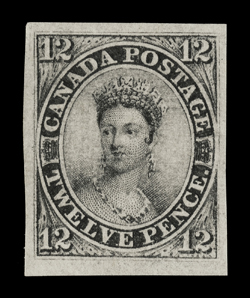
Spink Shreves Auction - The Black Empress of Canada - The Epitome of Perfection - A World Stamp Rarity - Worth $400,000-500,000

A Special Single Lot Auction Sale to be sold by Spink Shreves Galleries on January 27, 2011, in New York City. The esteemed auction house estimates this one stamp will sell between USD $400,000-500,000.


This is truly an amazing stamp and one of the Rarest Stamps of the World - A mint example of Canada's 1851 12d. Black Queen Victoria, in absolutely superb condition. Recently expertized by the Philatelic Foundation as “Genuine, Original Gum, Never Hinged” and numerically graded “98”. Without a doubt, the finest example extant and the greatest single Canadian stamp.


Here is the one lot auction description - 

#3, 1851 12d. Black on laid paper, an astonishing quality mint example of this legendary classic rarity, being in a condition unmatched by any other in existence, featuring a spectacular overall freshness and brilliance, with intensely rich color and a sharp detailed impression on pristine paper, four incredibly large and well balanced margins (more than likely the margin at bottom is a partial sheet margin), and its reverse is equally impressive, displaying absolutely immaculate full original gum without a single bend or blemish, and most astounding of all the stamp is never hinged, a superb gem in every regard. 

There is no question that this stamp is the finest mint example in existence. Its overall freshness, along with its extravagantly large margins, combined with the fact that it boasts full original gum that has never been hinged – places it in a category unlike any other world-class philatelic rarity in existence. Truly, it is a miracle how this remarkable stamp survived for nearly 160 years in this condition. 

While there are two or three mint singles that exist which are quite well margined, along with five pairs (one of which is in the Canadian Postal Archives and another in the Tapling Collection), not one is as superb as the example offered here, nor is any other example never hinged (and certified as such).

This exciting stamp is accompanied by a letter dated August 10, 1965 from J.N. Sissions, one of the most highly regarded Canadian auctioneers of the 20th Century, in which he describes the stamp as “…genuine and flawless, brilliant original gum, never hinged and immaculate in all respects. I believe it to be the finest existing copy.”

Attached to the letter are photographic enlargements of both the front and reverse of the stamp. In addition, the stamp was recently submitted to the Philatelic Foundation in New York City to obtain an updated report on its genuineness and condition.

On May 3, 2010 the PF issued certificate #486541 and stated the stamp is “unused, o.g., genuine, never hinged.” Furthermore, the PF assigned the coveted numeric grade of “Superb 98” to the stamp - a grade that is almost never assigned to any classic stamp of the world, let alone a world class rarity. And for those who are familiar with the Philatelic Foundation’s conservative reputation for grading (and being particularly demanding when calling a classic stamp never hinged or not), this is a clear indication that this stamp is truly something special and beyond compare.

To accurately estimate the value of such a unique stamp is understandably difficult – as no other copy exists in this incomparable never hinged condition. To at least get some starting point, the current 2011 edition of The Unitrade Specialized Catalogue of Canadian Stamps prices a very fine unused (no gum) example at C$150,000.00, but they then assign a 100% premium if the stamp has original gum.

Therefore, a catalog value of C$300,000.00 is appropriate for an original gum example that is in very fine condition. Of course, the Unitrade catalog does not even attempt to assign a value for an original gum copy in superb condition such as The Black Empress, let alone the fact that it is never hinged.

The earliest issues Unitrade attempts to price in never hinged condition is for the 1868-1876 Large Queen series, and never hinged copies are given a 300% premium over the very fine no gum pricing.

The last original gum, premium quality, mint example of the 12d. Black was in our November 2009 sale of the William H. Gross collection of Important British North America.

It realized $299,100.00 (including the buyer’s premium).

While the Gross example is a wonderfully choice stamp, its margins are not near as large as found on The Black Empress and, more significantly, it was hinged, as is every other known single or pair – except for the exciting example offered here.


Click here to begin viewing The Black Empress of Canada


If you have any comments about this stamp and article - please leave a comment below. Thanks.

Source http://www.shreves.com/

Monday, January 3, 2011

2011 - Happy New Year!

We would like to wish everyone a very Happy New Year!

The Boscastle Supplies Team.
www.boscastlesupplies.com

The Story of... America's 1898 issue Trans-Mississippi stamps

At first unpopular with collectors, these stamps won through as a great example of engravers' art
It's often the case with collectibles, including stamps, that the most coveted pieces begin with issues and examples which aren't initially popular.


There are a number of well-known examples such as the Double Geneva - which is worth a great deal partly as a result of its limited initial success - whilst the 1c Z-grill of Bill Gross's famous swap was never valued in its time.

In the world of coins, the 'Washlady Dollar' received its nickname from a contemptuous remark about its appearance.

The Trans-Mississippi issue was released in 1898 to coincide with the Trans-Mississippi International Exposition in Omaha, which was held from June 1 to November 1, 1898. There were no complaints about the way the stamp looked.

The William McKinley-appointed Postmaster General, James A. Gary, authorised the release of the commemorative set, which originally comprised eight stamps and was expanded to nine with the addition of the $2 value.

The full set was placed on sale at post offices on June 17, 1898. The stamps were intended to capture the spirit of the Western frontier, with depictions of farming, buffalo hunting, mining, and westward expansion among its themes.

Today, the Trans-Mississippi stamps represent the pinnacle of the engraver's art. The $1 Trans-Mississippi, depicting "Cattle in Storm," has often been called the most beautiful United States stamp ever produced.
However, the stamp-collecting community protested strongly against the new issue at the time. With the high cost of the Columbian issue fresh in collectors' minds and those stamps still available at a few branches, many felt that the Post Office Department was taking advantage of collectors with yet another expensive new issue.
This sentiment was further reinforced when the $2 denomination was added to the set. At the end of 1898, deliveries to post offices of the Trans-Mississippi issue were discontinued. Post offices with remaining stocks of the issue on hand returned them for credit, and most remaining stocks were destroyed.

Unfortunately, records were not kept of the quantity of each denomination destroyed, and so the number sold is not known. The set was originally intended to be the Post Office Department's second bi-colour stamp issue, after the 1869 definitive series.

Due to the outbreak of the Spanish-American War and the need for revenue stamps, the Bureau of Engraving and Printing could not meet the production requirements of the new issue and so the bi-colour plan was abandoned and the stamps were issued in single colours.

The 1¢ value, depicting Father Jacques Marquette, originally depicted a herd of bison. The Marquette vignette is based on a painting by William Lamprecht, located at Marquette University.

The 2¢ also underwent a design change, first appearing as the James B. Eads Bridge design in the bicoloured die proofs and then being switched with the $2.00 for the Farming in the West scene, which was based on a photograph taken on one of the farms of the Amenia and Sharon Land Company.
  
The 4¢ originally depicted a Cheyenne warrior based on a drawing by Frederick Remington, but instead the "Indian Hunting Buffalo" vignette was used. The 5¢ depicts "The Pathfinder," explorer and Army officer John C. Fremont.

The 8¢ and 50¢ values depict troops guarding a wagon train and a western mining prospector, both based on drawings by Remington. The source for the 10¢ stamp, showing the hardships of emigration, was discovered by Gary Griffith while visiting the Bureau of Engraving and Printing in 1992.

It is based on a drawing that was derived from a print of the painting Hardships of Emigration by Augustus G. Heaton, who also painted The Recall of Columbus, the basis of the 50¢ Columbian stamp. The $1, titled "Western Cattle in Storm," was derived from a painting called The Vanguard by Scottish painter, John A. MacWhirter. Ironically, the painting actually depicts a herd of Scottish cattle.

Trans-Mississippi stamps are well-worth looking out for at auction as high-quality examples can make good investments, as was seen in 2010, notably in March at Spink.

Source: http://www.paulfrasercollectibles.com/section.asp?catid=80&docid=5552

Thursday, December 30, 2010

Disney Pixar Characters to Grace New USPS USA Postage Stamps

Look for your favorite Disney Pixar to grace United States Postage Stamps next year! 


Soon, you’ll be able to send your snail mail graced with characters from “Cars,” “Ratatouille,” “Toy Story,” “Up,” and “Wall-E.” 

The stamps are part of a commemorative collector’s series, and will go on sale on August, 19.  Doubly cool:  they will be “Forever” stamps, which means that they will be valid regardless of how much postage increases in the future.

Source: http://www.diszine.com/content/disney-pixar-characters-to-grace-new-postage-stamps

Tuesday, December 28, 2010

USPS Post office issuing Indianapolis 500 anniversary postage stamp

The Indianapolis 500's 100th anniversary is one of 25 subjects to be highlighted in the U.S. Postal Service's 2011 Commemorative Stamp Program, unveiled Tuesday.

Ray Harroun, winner of the inaugural Indianapolis 500 in 1911, is featured on the stamp, which says "Indianapolis 500" and "100 Years of Racing." The stamp's image was created by illustrator John Mattos.

“It’s a great honor for the Indianapolis 500 to be featured on a U.S. Postal Service stamp,” Indianapolis Motor Speedway Corp. President Jeff Belskus said in a prepared statement.

“The stamp recognizes the 500 as a vital part of American culture and is a wonderful addition to our celebration of the 100th anniversary of the race in 2011.”

This is the second time that the Marmon Wasp, piloted by Ray Harroun, has been featured on a U.S. stamp.
The postal service receives thousands of suggestions annually for postage stamps. The Citizens’ Stamp Advisory Committee recommends 20 to 25 subjects for final approval by the Postmaster General. According to the postal service, “stamp subjects must stand the test of time, reflect the cultural diversity of the U.S. and have broad national appeal.”

This is the second time the Marmon Wasp, piloted by Harroun, has been featured on a U.S. postage stamp. The car also was highlighted as a 17.5-cent stamp in a transportation series in 1987.

The 2011 Indianapolis 500 is scheduled for Sunday, May 29, at the Speedway.

The latest stamp will be a Forever Stamp, which is always equal in value to the current first-class stamp rate, regardless of future price changes.

Source: http://www.ibj.com/post-office-issuing-indianapolis-500-anniversary-stamp/PARAMS/article/24265

Thursday, December 23, 2010

Off With Her Head: The Queen To Be Taken Off British Royal Mail Stamps?

Is this the modern definition of austerity? The potential selling off of the Royal Mail is not going to be hampered if the new owners want to replace Queen Elizabeth II with something else of their choosing.

Since the famous "penny black" went on sale back in 1840, all British stamps have borne the profile of the reigning monarch.

But if the Royal Mail is eventually sold to foreign owners, it's come to light that there's no law explicitly stating that the tradition must continue.

"There's nothing specifically to stop whoever runs the Royal Mail in future dropping the royal head," said Business Secretary Vince Cable (who arguably has more pressing business to deal with right now) though he also pointed out, "I think it is unlikely they would, because it is a very powerful brand."

But it has become a considerable cause for concern, seeing as the government is in talks with Buckingham Palace over the sticky matter. The postal services bill, as it is known, does give the Queen a veto over any use of her image, but, curiously, doesn't insist that her head is shown.

Predictably, the opposition Labour party has entered into the controversy, with Cable's counterpart, Shadow Business Secretary John Denham, accusing the coalition of leaving a "glaring loophole." Denham remarked, "The fact that they haven't bothered to protect the monarch's head on our stamps just shows how desperate they are to sell Royal Mail off as quickly and for as much cash as possible."

Ed Davey, the Liberal Democrat minister in charge of postal services, chimed in that, in fact, the previous Labour government should be held accountable for the situation but doesn't think the nightmare scenario will play out: "Quite apart from the law, any company would be absolutely stark staring mad to remove it."

The Queen herself has, of course, kept mum on the subject, possibly preferring to concentrate instead on her grandson's Prince William impending nuptials next April. And therein lies an intriguing compromise: what better gift could there be for the happy couple than for the Queen to suggest that her head be replaced by that of Queen-in-Waiting, Kate Middleton? A literal Royal stamp of approval, if you will. (via the Guardian)

Source:: http://newsfeed.time.com/2010/12/21/off-with-her-head-the-queen-to-be-taken-off-british-stamps/#ixzz18yTp2QS3

Wednesday, December 22, 2010

Stanley Gibbons Clarify Their Stamp Catalogue Pricing Policy

Stanley Gibbons issued today the following interesting press release:

Firstly my comment on this press release - The clarification they are publishing surrounds the point that the Stanley Gibbons Catalogue is really price catalogue for buying stamps from them - company Stanley Gibbons, rather than a guide as to what a stamp is really worth on the open market. 
Also note that they admit that the running costs of their business is built in to the cost of the stamps they sell. Fair enough ... so use their price guides with caution as a reference tool to accurately identify your stamp and to get an "idea" of what a leading dealer such as Stanley Gibbons would sell the stamp for. 


You may want to consult with other dealer price lists to get a better picture of value and remember - dealers do mark up their stamps to make profits - they buy low and sell high.

If you have any thoughts I'd love to hear from you in the comment section below.


The Stanley Gibbons Guide to Stamp Pricing


Stanley Gibbons' Catalogue Editor and lifelong collector, Hugh Jefferies, offers a few tips.

PRLog (Press Release) – Dec 22, 2010 – It is a common fallacy that the prices in our catalogues show what a stamp is ‘worth’, should you wish to sell it.

They are, instead, the price at which Stanley Gibbons will sell a fine example of the stamp in question, but that price includes a lot of other factors, as well as the inherent ‘value’ of the stamp itself.

There are costs in running any business and these are built into the price of any stamp shown in the catalogue, although the proportion of the price that relates to the stamp and that which relates to ‘business overheads’ will vary from stamp to stamp.

What is true is that the prices shown in the catalogue represent an accurate ‘guide’ to the value of the stamps listed in it. Stanley Gibbons are now the only major philatelic publisher whose stamp catalogue is the firm’s price list. Naturally, if the prices are set too high, no one will buy our stamps, if they are too low, we will have difficulty replacing our stocks.

It is therefore vitally important to the future of the company that the prices in our catalogues are set as accurately as possible. As a result, a great deal of care is taken over those prices – which is why they are held in such authority by collectors, dealers and stamp auction houses throughout the world.

Each year, every price in our annual catalogues is checked and amended if necessary, having regard to the prices being achieved at auction as well as the demands of our customers at 399 Strand and orders coming in via the post, email and our website. Prices are held, increased or reduced according to those factors, giving a very accurate picture of the state of the market for each and every stamp.

Can stamps be purchased for less than the prices quoted in this catalogue?

Of course they can. Stanley Gibbons themselves will frequently have stamps in stock at prices lower than ‘full catalogue’. Every business offers discounts and makes ‘special offers’ from time to time and Stanley Gibbons is no different. That apart, however, it should always be remembered that the prices quoted in the catalogues are for stamps in fine condition.

Stamps with minor defects, heavy postmarks, slight fading and other flaws will frequently be offered at lower prices, both by Stanley Gibbons and by other dealers and auction houses.

It is very important that, when you are thinking of buying a stamp for your collection, you carefully consider the condition of the item in question. Does it match up to the Stanley Gibbons definition of ‘Fine’? If it doesn’t, is the price at which it is being offered too high? If you believe that the price is higher than it should be, leave it alone – or if you are really desperate, haggle for a better deal.

The knowledge as to what is ‘fine’ and therefore worthy of ‘full catalogue’ is one that you will gain with experience and will vary from stamp to stamp. Any stamp less than 100 years old should really be perfect in every way, but one can be more forgiving with older issues.

Briefly, here are a few of the things to consider.

Gum

For unused stamps issued after 1936 prices are for unmounted mint – stamps never previously hinged. Modern stamps with hinge marks should be substantially discounted. For earlier stamps, heavy mounts and multiple hinges will also detract from the value, while unused stamps with the gum removed are worth considerably less.

Margins
For imperforate stamps these should be clear on all sides – the design should not be cut into or even touching the edge of the stamp.

Perforations
Check that these are complete, that none are missing or short, especially at the stamp corners. Ideally the margin between the stamp design and the perforations should be even and well balanced – known as ‘well centred’.

Paper
Check that there are no tears or thins to the paper – on the front as well as the back – and that there are no bends or creases. Again, the greater the damage the further away from ‘full catalogue’ the stamp is worth.

Postmarks
These should be clear, clean and should not disfigure the stamp. The prices for all British stamps issued after 1880 assume used stamps to be cancelled with a clean, clear circular datestamp. Heavy parcel, wavy line or slogan cancellations reduce stamp values significantly. On the other hand, very lightly cancelled stamps should sometimes be viewed with suspicion. There needs to be enough of the postmark showing to prove that the stamp has really been used!

If the above notes seem complicated, don’t worry. You will soon become adept at viewing every stamp in the light of its condition and deciding what proportion of catalogue you are prepared to pay. If you are not certain, ask the dealer for a guarantee that he will refund your money if you’re not happy with your purchase. All good dealers will be happy to provide this.

So, buy carefully – but, above all, have fun!

For a more in-depth guide to condition and how Stanley Gibbons define, ‘fine’, visit http://www.stanleygibbons.com/corporate/corporate-news/t ...

# # #

About Stanley Gibbons:

Founded in 1856, Stanley Gibbons is established as the most well-known, respected and trusted name in philately and collectibles. With over 3 million stamps in stock, the business has grown to become the largest name in stamp collecting serving both collectors and investors alike. Stanley Gibbons is also Europes largest dealer in autographed material, memorabilia and rare historical signatures through its division, Frasers Autographs.
www.stanleygibbons.com
www.frasersautographs.com
Please make a comment below :-) thanks!

Tuesday, December 21, 2010

Botswana Post exhibition depicts postal service history

This romantic letter to a loved one, is among the works on display and captures the Botswana Post stamps exhibition theme, which is: "Send it by letter".


The exhibition, which is organised by the National Museum, monuments and Art Gallery, is held at the Octagon Gallery and will be running until the end of February next year. The aim of the exhibition is to reflect on the evolution of the postal service in the country from postal trees, runner posts to the current mailing system. 

Botswana Post's head of communications, Lebogang Bok, revealed how people used to deliver mail on foot.
Bok said there are some designated trees around the country, which were used as post offices. One such tree is in Palapye while the other one is in Molepolole at the main Kgotla. Bok said they recently held the commemorations of the World Post Day at the Molepolole Kgotla because of the historical significance of that place to the Post Office.

been holding discussions with the National Museum to declare some of the trees as national heritage sites. Talking about the exhibition, Bok said you "cannot separate a postal stamp from a letter or a stamp from a post office".  She said this is why the exhibition is depicting the history of the post office.

Bok said every time, the National Museum considers some of the artefact that it has in store. She said this time they decided to stage an exhibition on stamps.  "We also wanted to showcase the postal artefacts."
Bok said by this exhibition, they also want to teach Batswana about philately, which is the art of collecting stamps.

They would also want to create awareness among the public about the usefulness of postage stamps.  According to Bok, postage stamps can be used to market the country as every stamp carries a lot of history. In her view, postage stamps can also be used to promote the tourism industry of a country.  "Some of the stamps depict our wildlife heritage."

Some of the items at the exhibition include old mail bags.  The mail bags became common during the era of the mail train.  The bags would be delivered by the train guard at their intended destnations.

Other artefacts on display are animal horns, drums and whistles.  These items illustrate how people used to communicate in villages before the postal service was introduced.  There is also a railway track, which signifies the mail train.  In relation to the train, there are fire extinguishers, which were used at railway stations as a safety measure in case of a fire broke out.

There is also the colourful bicycle, which was used by the postmaster as well as old typewriters and the telephone exchange. Old post boxes are also on the display. Post boxes were distributed all over the country.  The mail would be deposited into the boxes and postmen would be responsible for taking and collecting such mail to the sorting centre.

There are also scales that were used to weigh the scale.   Some of the stamps exhibited include the one showing the late Pope John Paul during his visit to Botswana in 1988. There is also another stamp, which was dedicated to Mpule Kwelagobe when she scooped the Miss Universe title in 1999. Some stamps depict cultural implements like the ox hide milk bag and wooden spoons. The Principal Curator at the National Museum, Winni Kgwatalala, said they have been holding exhibitions on different themes.  She said this is the first time that they have held a stamps exhibition.   Kgwatalala said when the capital city of Bechuanaland was in Lobatse, a philatelic museum was opened in that town.  It was later relocated to Gaborone. Kgwatalala said the Botswa Post provides them with an issue of any postal stamps that they produce.

She said the exhibition relates the history of the post office, revolving from the time when people used to deliver mail by running like in a relay race. One person would run from a specific point and pass on the letter to the next person until it reached the final destination. She said later on, mail was delivered by mail train. She said a stamp could be an ambassador.  "They can show history like the papal visit to the country. They also carry culture. The stamp is an ambassador. It is an informer.  When a letter is posted to the United Kingdom, people will be able to learn about Botswana from the stamp."

She said they also want to promote stamp collecting. She noted that stamps are collected for different reasons, some of which are commercial.  She cited that a stamp, which was bought for P5, could later be sold for P50, 000.  Kgwatalala said they still want to promote communicating by letter.

Source: http://www.mmegi.bw/index.php?sid=1&aid=7438&dir=2010/December/Friday17

Monday, December 20, 2010

Famous Stamp Collectors - The rare stamp collections of Chess champion Anatoly Karpov

One of the greatest players ever, Karpov owns a hugely valuable collection led by Belgian stamps.

Anatoly Yevgenyevich Karpov was born on May 23, 1951 in the Urals region of the Soviet Union.

He excelled at chess from a young age, learning the game at four and becoming a Candidate Master by age 11.

Karpov didn't let chess interfere with school, earning a gold medal for academic excellence before studying maths and economics at university. But his teenage years were mostly spent studying at Mikhail Botvinnik's famous chess school despite World Champion Botvinnik's own assessment that, "The boy does not have a clue about chess, and there's no future at all for him in this profession."

Becoming the youngest Soviet National Master in history at 15 in 1966 Karpov finished first in his first international tournament in Třinec, and worked his way up the rankings until he was considered the best candidate to take on the World Champion, American Bobby Fischer.

Fischer, though considered one of the greatest players in history, was erratic and distrustful, especially in major matches against Soviet players. He defaulted following a dispute with governing body FIDE over the rules, handing his rival the victory.

The frustrated Karpov entered a phenomenal number of chess tournaments over the following decade in order to legitamise his status as Champion where he was a daunting force and for some time held the record for most consecutive tournament victories (nine).

He is considered one of the greatest players of all time. Indeed his only rival by many statistics is the player with whom he had a long-drawn, close-fought rivalry for the World Championship: Garry Kasparov.
Karpov has always been an avid collector, devoting the same relentless dedication to collectibles as he has to his chess. Like most of his classmates he collected pins and generated a collection featuring about 30,000 sport, Olympic and chess pins.

He also collects stamps however, and the first stamp in his collection was the USSR stamp celebrating 40 years of the Red Army in 1958. But it wasn't Soviet stamps which really grabbed Karpov's interest.

Instead Karpov's attention was drawn by colonies of the British Empire, and also stamps showing animals which could not be seen in Russia such as snakes, kangaroos or zebras. He has gone on to collect chess and Olympic Games stamps from the first modern Olympic Games in Athens, Greece (1896).

Karpov also has a range of stamps from the USSR, France, Monaco, and the Netherlands, but his most valuable selection is from Belgium and the Belgian Congo, of which he has the largest existing collection. The earliest stamps (until around 1869) are notable for their attractive designs.


One of his Belgian stamps is one of just fourteen examples of the famous Termonde invert which shows one of the buildings upside down. It is thought to be worth around $100,000. By some estimations Karpov’s collections of stamps and other items are worth $15m. But he has not collected primarily as an investment.

Karpov has spent some of 2010 finishing off a book which will place all the collectibles in their historical context. The book was delayed when the original text was stolen, but the book is now substantially complete.
In his later years Karpov has had some involvement with politics including at one point being the President of the Soviet Peace Fund, and has an interest in international relations. Karpov has often said he sees stamps as a useful tool for connecting with other cultures, and a route into communicating with people all round the world.

Source:  http://www.paulfrasercollectibles.com/section.asp?catid=211&docid=5440&n=151210

Friday, December 17, 2010

John E. du Pont dies - Rare 1856 British Guiana Magenta $1million Stamp becomes available?

John E. du Pont, famous stamp collector and philatelist, owner of the rare 1856 British Guiana One Cent Magenta Stamp (bought at auction for US$ 935,000) sentenced to prison in 1997 for the irrational murder of an Olympic wrestler, David Schultz, died in prison Thursday morning, December 8th, at the age of 72.

“Mr. du Pont was found unresponsive in his cell at Laurel Highlands State Prison near Somerset, Pa., a prison spokeswoman told The Associated Press.

“He had had some illnesses, so we are considering it natural,” Susan McNaughton, the spokeswoman, told The A.P., adding that the Somerset County coroner would make the final determination of the cause of death.

The British Guiana 1c Magenta stamp housed in his collection, being unique, holds the title to the rarest stamp in the world, as reported below in The New York Times article.

We can imagine that offers will be presented to his Estate.

It’s the only stamp missing in the British Colonial Collection of Queen Elizabeth…

The original stamp, a one-cent issue crudely printed with black ink on lilac-colored paper, is one of the icons of the hobby, largely because of the tradition that it was found by a Scottish schoolboy in 1873 and sold to a local dealer for six shillings (about $1.60 in those days). It is now owned by a murderer.

The second copy, whose existence is being reported in the next issue of Stamp Collector, a fortnightly newspaper, reportedly turned up in Romania in the mid-1980′s, when it was bought by an unidentified dealer from Bremen, Germany. The German dealer said the seller, a dancer, had inherited the stamp in a collection from her grandfather, who was a servant to a Russian nobleman.

Initial microscopic tests have been conducted by David Feldman, a prominent Swiss auctioneer of rare stamps and coins, and show that the paper and ink are appropriate to a stamp issued in 1856. Further tests could take a year, Mr. Feldman added.

Mr. Feldman was the auctioneer for what is currently the most valuable stamp ever sold, the Swedish Tre Skilling Yellow, an 1855 stamp that was printed in yellow rather than its normal green. He sold that stamp in November 1996 for $2.3 million (including his commission), after verifying that the yellow color was not due merely to the fading of a stamp that had originally been green.

A small number of the British Guiana stamps were produced by a local newspaper printer when supplies of the original one-cent issue, which had been produced on high-quality paper in London, ran out.

According to the stamp’s lore, it was found by a 12-year-old Scottish lad named Vernon Vaughan in 1873. It was still attached to a piece of paper, so the boy soaked it off, and the poor quality of the stamp’s paper became more evident.

Vernon sold the scruffy stamp to N. R. McKinnon because the boy wanted to buy better-looking stamps for his collection. (What may be the second known copy is also scruffy.)

Within a few years its rarity came to be recognized, and it passed through the hands of several prominent stamp collectors: Count Phillippe von Ferrari of Paris, Arthur Hind of Utica, N.Y. (who paid $35,250, a record stamp price, in the 1930′s), and Frederick T. Small of Fort Lauderdale, Fla.

In March 1970 Mr. Small sold the stamp to a syndicate for $280,000.

The syndicate sold the stamp in 1980 for $935,000 to a buyer who was anonymous at the time but whom Stamp Collector and others have identified as John E. du Pont.

Mr. du Pont, a well-known collector and a du Pont heir, was convicted in February 1997 of shooting and killing an Olympic wrestler whom he had sponsored, and was sent to a hospital for the criminally insane.

Thursday, December 16, 2010

Give the gift of a hobby - Stamp Collecting

When thinking about gifts for children this holiday season, why not consider the gift of a new hobby? With children spending countless hours watching television, playing video games and on computers, it’s more important than ever to introduce them the wide range of leisure activities.

A hobby such as stamp collecting can open a world of discoveries. Every stamp has something of interest and with more than 200 countries issuing stamps year after year since the 1840s, there is a lot to discover.
I collect giraffes on stamps and recently acquired a 1922 stamp from Tanganyika. The name “Tanganyika” was new to me, so I looked it up and was surprised to learn that this African country changed its name to Tanzania. Some varieties of this stamp have a sideways watermark that make the stamp a bit more valuable. I also was surprised to find that the used copies of this stamp are more valuable than the unused ones.

Now I want to find other stamps in this set. Stamp collecting has been called “the hobby of kings and the king of hobbies.” Linn’s Stamp News estimates that more than 5 million individuals in the United States collect the small pieces of paper. While President Franklin Roosevelt may have been the most famous U.S. collector, other well-known collectors include financial gurus Bill Gross and Warren Buffett, astronaut Sally Ride, actor James Earl Jones, author James Michener, explorer Jacques Cousteau, musician John Lennon, cartoonist Garry Trudeau and French President Nicholas Sarkozy. If you choose to collect stamps, you will be in good company.
A few people collect stamps because some stamps are worth a lot of money, but most of us collect because we enjoy the stamps. In fact, stamp collecting is not an expensive hobby. You and your children can find many stamps to enjoy for less than $2. Plus, stamps come in your mail. Pay attention to envelopes, carefully cut the stamps out and store them for your enjoyment.

You can store your stamps in a stamp album or on special pages we call stock pages. You also can save your stamps in a shoebox or in envelopes. No matter what your choice, be sure that the stamps are kept in a low-humidity environment.

Centre County is fortunate to have the headquarters of the American Philatelic Society, our country’s oldest and largest stamp-collecting organization. The APS has served stamp collectors since 1886. The society has a library, offers beginner classes and sells supplies that can help your child get started. Learn more by touring the historic Match Factory at 100 Match Factory Place in Bellefonte or by visiting www.stamps.org.

This holiday season, consider introducing a child to a new hobby. Whether it be stamp or coin collecting, making model airplanes, crafting jewelry or another hobby, a gift certificate for something like an introductory class could be the start of a lifetime passion.

Gretchen Moody is director of education for the American Philatelic Society. This weekly column is a collaboration of Centre County Communities that Care serving Bald Eagle, Bellefonte, Penns Valley and Philipsburg-Osceola area school districts, and Care Partnership: Centre Region Communities that Care serving the State College Area School District.


Read more: http://www.centredaily.com/2010/12/15/2402613/give-the-gift-of-a-hobby.html#ixzz18JAiTM9y